

Dr. Genevieve Alorbi
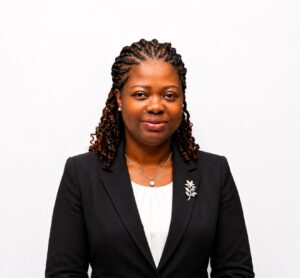
Genevieve Alorbi
Dr. Genevieve Alorbi completed her Ph.D. in Economics at Southern Illinois University Carbondale (SIUC) in April 2017, after earning a Master’s degree in Economics from Western Illinois University in 2012 and a Bachelor’s degree in Economics from the University of Ghana in 2010. She has also completed several professional development programs, including the Certificate in Effective College Instruction (June 2022) offered by the Association of College and University Educators (ACUE) and the American Council on Education (ACE).
Dr. Alorbi is currently an Assistant Professor of Economics on the tenure track at SUNY Oswego. Since joining the Economics Department in Fall 2021, her teaching responsibilities have included foundational principles of economics courses as well as advanced courses in Health Economics and Labor Economics.
As a researcher, Dr. Alorbi is committed to translational research that builds upon theory while connecting to evidence-based policy. Her work seeks to explain both historical and ongoing economic phenomena, support future planning, and contribute practical solutions to societal challenges. Her primary research interests lie in applied microeconomic theory, with emphasis on healthcare markets, health labor, labor market inequities, health policy, and health systems, particularly the quality of healthcare provision. Her research aims to highlight disparities within these areas in order to inform policy, promote empowerment and education, and propose interventions that help reduce unequal outcomes driven by differences in demand and supply. In addition, she conducts research in Development and International Economics, focusing on trade, education, and foreign aid and investment in less developed countries.
Dr. Alorbi’s publications reflect her research interests in healthcare policy, labor inequities, global health outcomes, and economic development. Her recent work includes research on the impact of the Hospital Readmissions Reduction Program (HRRP) on patient discharge status in New Jersey, as well as studies examining obesity, diabetes, and hypertension in Ghana. She has also contributed to research on global COVID-19 fatality rates, healthcare spending and human development, and the social determinants of cancer incidence and mortality worldwide.
If you recall, what influenced your decision to become a member of the International Atlantic Economic Society?
I heard about the society through a colleague and was drawn to the International Atlantic Economic Society because of its strong focus on meaningful economic research and collaboration. I appreciated the opportunity to connect with scholars and professionals who share interests in important policy issues such as health, education, and employment. The Society’s international perspective and welcoming academic community made it an organization I wanted to be part of.
What types of projects/research are you currently working on and what inspired/motivated you to pursue these interests?
My current research focuses on issues related to health, education, and employment. I am especially interested in how public policy affects people’s economic opportunities and overall well-being. These interests grew from seeing how access to healthcare and education can shape long-term outcomes for individuals and communities. I enjoy research that not only analyzes data but also helps inform policies that can improve people’s lives.
Together with my co-authors, I recently completed a manuscript based on a project funded by the SUNY Potsdam Lougheed Foundation that we initiated in 2019. This project involved a comprehensive community health screening and a detailed quantitative survey of residents in Ghana’s underserved Upper West Region, focusing on diabetes and cardiovascular disease assessments.
A current project that is also underway is from a patient-hospital-level dataset with a study on the quality of health care received by patients based on economic status and demographics.
What advice would you give to someone who is considering entering your line of work/field of study?
As an assistant professor of economics and a family woman currently navigating the tenure-track journey, I can say that the path can be demanding, but it is important to remember that the journey itself is just as meaningful as the destination. Take time to create lasting memories along the way.
From the beginning of your Ph.D. program, make it a priority to build a strong network of mentors, research collaborators, and professional connections. These relationships are invaluable, both during your doctoral studies and throughout your career in academia and beyond. The network you cultivate early on will continue to support and guide you later in life.
Just as importantly, do not neglect your personal life. Pursue your academic and professional goals with dedication, but also make time for your family and personal well-being. Striving for a healthy balance between career and family life will serve you well in the long run.
Going forward, what other projects/research are you planning or hoping to pursue?
Going forward, I hope to continue researching topics related to labor markets, healthcare, and economic opportunity. I am particularly interested in studying how changes in the economy and public policy affect different groups of people. I would also like to explore more international and comparative research to better understand policies that support economic growth, workforce participation, and social well-being.
One project I am currently exploring is a collaborative study on immigrants’ knowledge and experiences related to fibroids. Another area of interest focuses on the opioid crisis in Ghana, as well as lifestyle-related diseases such as diabetes and hypertension, and the socioeconomic factors that contribute to these health conditions.
What’s your favorite hobby?
One of my favorite hobbies is spending quality time with my family. I also enjoy reading and exploring cuisines, places, and cultures. What I love doing most, however, is using my knowledge and experience as a tool to empower others and to promote diversity and open-mindedness at every opportunity I get.