
Dr. Paul J. Pieper
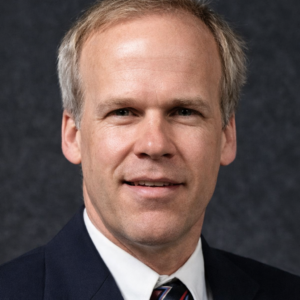
Paul J. Pieper
Dr. Paul J. Pieper is an Associate Professor of Economics at the University of Illinois Chicago, where he has built a distinguished career in economic research, teaching, and service. He earned his PhD in Economics from Northwestern University in 1984.
Dr. Pieper’s research spans a wide range of topics, with particular focus on fiscal policy, economic measurement, and the academic labor market. His work has been published in leading journals such as The Review of Economics and Statistics, The Journal of Economic Education, and the American Economic Review. Much of his scholarship (often in collaboration with prominent economists including Robert Eisner) has contributed to deeper understanding of federal deficits, national saving, and the measurement of economic indicators.
In addition to his academic contributions, Dr. Pieper has been actively engaged in policy-relevant research and advisory roles. He has served as a Visiting Researcher at the U.S. Bureau of Economic Analysis and as a consultant to Argonne National Laboratory. He has also contributed to the broader research community as an elected member of the National Bureau of Economic Research Conference on Research in Income and Wealth and the International Association for Research in Income and Wealth.
Dr. Pieper’s contributions to academia and his institution have been recognized with honors such as the Alumni Award for Service from the College of Business Administration. His current research continues to explore the effects of budget deficits, challenges in economic measurement, and dynamics within the academic labor market.
If you recall, what influenced your decision to become a member of the International Atlantic Economic Society?
My first IAES conference was in Berlin in 2017. It was a case of serendipity as the conference dates aligned with my university’s spring break. I discovered that it was a great opportunity to meet and interact with other scholars and I received valuable feedback on my paper. Since then, I have tried to attend as many annual conferences as possible and have also followed IAES publications closely.
What types of projects/research are you currently working on and what inspired/motivated you to pursue these interests?
I am currently researching the determinants of voting behavior at the Federal Open Market Committee. One aspect that I am particularly interested in is the influence of the Federal Reserve district’s political leanings on the district president’s policy preference. I am also interested in the teaching of economics. I have recently argued that the Federal Reserve’s implementation of an ample reserves policy has rendered the standard textbook presentations of the Liquidity-Money and aggregate demand curves obsolete.
What advice would you give to someone who is considering entering your line of work/field of study?
The standard recommendation to prospective Economics PhD students is to study math and then more math. Yes, math is important but so is breadth in economics. Too often students finish their first year in the PhD program and do not know where to go next, not having studied much economics beyond the core. Take a few field courses as an undergraduate to better appreciate the richness of economics and survey a few others on your own to help discover where your true passion lies.
Going forward, what other projects/research are you planning or hoping to pursue?
I have always had an interest in Okun’s law. While it has become an important part of the macroeconomist’s toolkit, there are often large residuals in the estimated relationship. I believe that we can advance our understanding of short-run macroeconomics if we can better pinpoint the sources of those residuals.
What’s your favorite hobby?
I love outdoor activities, especially hiking and biking. If these can be combined with travel, so much the better!