

Dr. Olajide Idris Sanusi
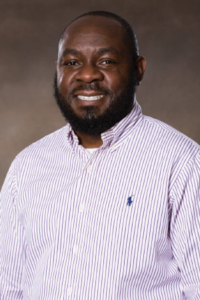
Olajide Idris Sanusi
Olajide Idris Sanusi, Ph.D., is an Assistant Professor of Economics in the Austin E. Cofrin School of Business at the University of Wisconsin-Green Bay. He teaches introductory and intermediate economics, including courses in microeconomics and macroeconomics. Dr. Sanusi earned his Ph.D. in Economics from Southern Illinois University Carbondale in 2018, an M.A. in Economics from Western Illinois University in 2014, and a B.Sc. in Economics from Ahmadu Bello University, Nigeria, in 2002.
His research focuses on applied macroeconomics, international economics, economic development, forecasting, and the effects of economic and geopolitical uncertainty. He also applies econometric, forecasting, and machine learning methods to economic and financial questions. His research has been published in peer-reviewed journals and addresses topics including macroeconomic and financial forecasting, productivity and efficiency, internationalization, energy and environmental economics, and geopolitical risk. He actively engages in scholarly research, academic conferences, and professional activities in economics.
If you recall, what influenced your decision to become a member of the International Atlantic Economic Society?
I first learned about the International Atlantic Economic Society through a colleague who recommended it to me. I was also interested in having an opportunity to present my research, exchange ideas with other economists, and become more connected with the broader economics community. Joining the Society provided a good avenue to do that while also learning from researchers working on a wide range of economic issues.
What types of projects/research are you currently working on and what inspired/motivated you to pursue these interests?
My current research focuses particularly on Islamic economics and finance, while also building on my broader interests in macroeconomics, international economics, economic development, forecasting, energy and environmental economics, and economic and geopolitical uncertainty. In my Islamic finance research, I am interested in understanding how Islamic financial institutions compare with conventional financial institutions in areas such as profitability, stability, risk, and resilience, and how institutional and economic conditions influence these outcomes. I am also interested in how Islamic finance can contribute to financial inclusion and economic development. What motivates my research is the opportunity to apply economic theory and quantitative methods to important real-world problems and to produce evidence that can contribute to our understanding of financial markets, economic development, and policy
What advice would you give to someone who is considering entering your line of work/field of study?
My advice would be to develop a strong foundation in mathematics, economic theory and quantitative methods, but also remain curious about real-world economic issues. Economics provides many opportunities, but it requires patience and a willingness to keep learning. For students interested in research, I would also encourage them to start doing research early, learn from other researchers, attend conferences, and develop relationships with people in the field. Most importantly, find questions that genuinely interest you. Research can be challenging and sometimes frustrating, so having genuine intellectual curiosity about the questions you are studying can make a big difference.
Going forward, what other projects/research are you planning or hoping to pursue?
I hope to continue working on questions involving economic and geopolitical uncertainty, macroeconomic and financial forecasting, and international economic relationships. I am particularly interested in exploring how advances in machine learning and other quantitative methods can complement traditional economic approaches to address complex economic questions. I also hope to develop more collaborative research projects that bring together different perspectives and approaches to economic problems.
What’s your favorite hobby?
I enjoy reading, fishing, and, when I have the opportunity, getting a good amount of sleep. Reading allows me to learn and explore new ideas, while fishing gives me a chance to slow down and disconnect from work. And after a busy semester, I have to admit that there is something to be said for simply getting some extra sleep!