

Dr. M. Christine Phillips
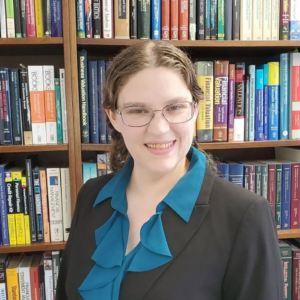
Dr. M. Christine Phillips
Dr. M. Christine Phillips is an expert in applied econometrics, data analysis and statistics, regulatory and institutional impact, and applications of political science to markets. She works for Phillips, Fractor & Company in Pasadena, California. She currently focuses on principal-agent matters and the modeling and valuation of statutorily granted rights. Since joining the firm in 2014, Dr. Phillips has worked on a wide array of cases, including issues involving technology and patent valuation, economic substance, rent control, discriminatory behavior, statistical forecasting, and applied economics.
Some of her recent papers include “A Problem with Empirical Studies of Party Policy Shifts: Alternative measures of party shifts are uncorrelated” in the European Journal of Political Research and “The Simplest Government Heuristic of All: Citizens Infer that Governing Parties are pro-European Union” in Comparative Political Studies. Christy also serves as an adjunct instructor for Azusa Pacific University.
Dr. Phillips earned her Ph.D. at Texas A&M, where she studied political science, applied econometrics, and comparative systems. Before her doctoral work, she earned an M.A. in Political Science from the University of California, Davis. Her undergraduate training was at Grove City College, where she earned a B.A. in Political Science with additional minors in mathematics, computer science, and business analytics.
In the past, you have worked on a wide range of issues, from patent valuation to rent control and statistical forecasting. Which topics do you find most intellectually engaging?
I especially enjoy the statistical simulation side of my work. My formal training is in political science, with a background in economics, but what I really love is working hands-on with data: testing models, running simulations, and exploring how different assumptions play out.
What factors shape economic outcomes in the kinds of cases you work on?
Many of the cases I work on involve trade secrets or wrongful termination. Courts often want to understand questions like how difficult it would be for someone to find a new job, or how valuable certain proprietary information is. To answer these, we rely on econometrics and statistical simulations to estimate what likely would have happened if no violation had occurred.
A large part of the work involves valuation: assessing “what would have been” under different interpretations of a contract or set of actions. Essentially, we model alternative scenarios to quantify the economic impact of each side’s claims.
In your published research on political behavior and policy interpretation, what originally drew you to these topics?
On the political science side, my work grew out of an interest in game theory models. I’ve always enjoyed rational choice theory and analyzing how voters behave within those frameworks. There’s something very compelling about using formal models to explain real-world decision-making.
My work on policy interpretation developed more from my applied experience as an expert witness. In reviewing different methodologies used across cases, I became interested in identifying what constitutes the most appropriate approach (particularly for recurring questions like measuring consumer confusion) and proposing more consistent, rigorous standards.
What impact has your applied research had on policy or practice?
Impact can be difficult to measure directly, but in litigation, economic analysis plays a meaningful role. The valuations we produce can influence case outcomes by helping ensure that businesses are not unfairly penalized when they’ve done nothing wrong, while also making sure that individuals or firms receive appropriate compensation when harm has occurred.
Our work has also led to the development of a product called Lantana Reports. It is designed to assist individuals and attorneys dealing with insurance claims and losses from natural disasters. The goal is to provide scientifically credible damage estimates while streamlining what is often a complex and time-consuming process.
By standardizing reporting, the product helps attorneys and claimants spend less time on paperwork and more time focusing on recovery. We’re starting locally, but the hope is to expand and support people across the country who are dealing with significant loss.
What advice would you give to students or early-career professionals interested in a career similar to yours?
For those interested in expert witness work, I recommend reading publicly available legal documents such as complaints and court filings. Getting familiar with the terminology and structure of these cases is incredibly helpful.
It’s also valuable to connect with professionals in the field. Shadowing someone or having conversations about their work can provide insights you won’t get in a classroom. There are real-world complexities, especially around deadlines and messy data, that require practical experience.
More broadly, my advice is simple: keep going. We’re in a period of uncertainty, but new opportunities continue to emerge as we learn and adapt. While everyone gets tired of their dissertation, don’t overlook practical skills! Strong proficiency in tools like Microsoft Word still matters more than people expect.
Looking ahead, are there particular research areas that you find especially intriguing?
I’m particularly interested in graph theory and network analysis, anything involving interdependencies and complex systems. These areas offer powerful ways to understand how interconnected structures behave, which has applications across both economics and political science.
What is your favorite hobby?
I enjoy reading and crafting. I’m especially proud of shirts I’ve sewn for my nephew. They have glow-in-the-dark buttons!