

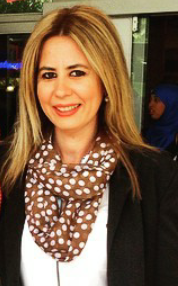
Dr. Billur Cohen
Dr. Billur Cohen
Dr. Billur Cohen is an Assistant Teaching Professor in the Department of Economics at Loyola University Maryland. She holds a Ph.D. in Economics and has been teaching at Loyola since 2022. Prior to this role, she completed her post-doctoral fellowship at Johns Hopkins University’s Institute of Applied Economics, Global Health, and the Study of Business Enterprise, supported by the Scientific and Technological Research Council of Turkey.
Dr. Cohen has published multiple peer-reviewed articles and book chapters since 2009 and currently serves on the editorial board of a scholarly journal. Her teaching and research interests span applied econometrics, business statistics, innovation, and sustainability.
If you recall, what influenced your decision to become a member of the International Atlantic Economic Society?
As an academic with an international background and a strong interest in global economic issues, I was drawn to the International Atlantic Economic Society’s mission of fostering global communication among economists. The Society’s emphasis on applied economic research and international collaboration aligned well with my own research interests, particularly in development economics, innovation, and sustainability. It also offers a welcoming and intellectually stimulating platform.
What types of projects/research are you currently working on and what inspired/motivated you to pursue these interests?
I am currently working on two key empirical projects. One analyzes the impact of innovation on CO₂ emissions across U.S. states. The other focuses on the circular bioeconomy and its role in sustainable development, with the goal of contributing to policy foresight in this field.
My motivation for pursuing these topics comes from a long-standing interest in the intersection of environmental sustainability and economic growth, particularly through the lens of innovation. Given the urgency of climate change and the importance of evidence-based policy, I’m passionate about generating insights that can inform more sustainable economic strategies.
What advice would you give to someone who is considering entering your line of work/field of study?
Stay curious and be patient. Economics, especially applied fields like development economics and environmental policy, requires not only technical skills but also a deep understanding of context and real-world dynamics. Don’t hesitate to explore interdisciplinary connections and develop strong empirical methods. Finally, find mentors and communities that will support your growth and push you to think globally.
Going forward, what other projects/research are you planning to or hoping to pursue?
Looking ahead, I plan to expand my work on innovation and sustainability to examine regional disparities in green transitions and the role of institutional quality in shaping outcomes.
What’s your favorite hobby?
Outside of academia, I enjoy hiking and spending time in nature with my two dogs. It helps me to recharge. I also love exploring different cuisines and cooking as a way to unwind.